

THE SANAME JOURNAL
Quick and Healthy Meal Prep Ideas for Busy Nights
Last Updated: November 15, 2026
Quick Summary
Quick and healthy meal prep ideas for busy nights rely on cooking a little extra once, so dinner is half done when you get home. Batch-cook soups, curries and stir-fry bases, and prepare grab-and-go breakfasts like overnight oats and egg muffins, which keep three to four days refrigerated.
- Cook a double batch of soup or curry and freeze half in single-serve portions.
- Overnight oats take about 5 minutes of active prep the night before.
- Egg muffins bake at 180°C for 18-20 minutes and reheat in 40 seconds.
- Most cooked meals keep three to four days in the fridge; label each container with the date.
- Thaw frozen meals in the fridge overnight, and never refreeze a thawed meal.
Table of Contents
- Why Busy Weeknights Need a Meal Prep Plan
- Healthy Meal Prep Recipes for Breakfast, Lunch and Dinner
- 30-Minute Healthy Meals for Weeknights
- Freezer-Friendly Meals and Batch Cooking Ideas
- Food Safety, Storage and Reheating Tips
- Stocking Your Freezer and Fridge With SANAME This Week
- Frequently Asked Questions
Why Busy Weeknights Need a Meal Prep Plan
Quick and healthy meal prep ideas for busy nights come down to one habit: cook a little more than you need once, so dinner is half done when you get home.
This guide covers recipes, realistic weeknight timings, freezer strategies and food safety, so you can pick what fits your week and start small.
Healthy Meal Prep Recipes for Breakfast, Lunch and Dinner
The best meal prep recipes reheat well, hold their texture for several days, and come from a short shopping list. Start with one protein, one vegetable and one carb, then rotate flavours through the week.
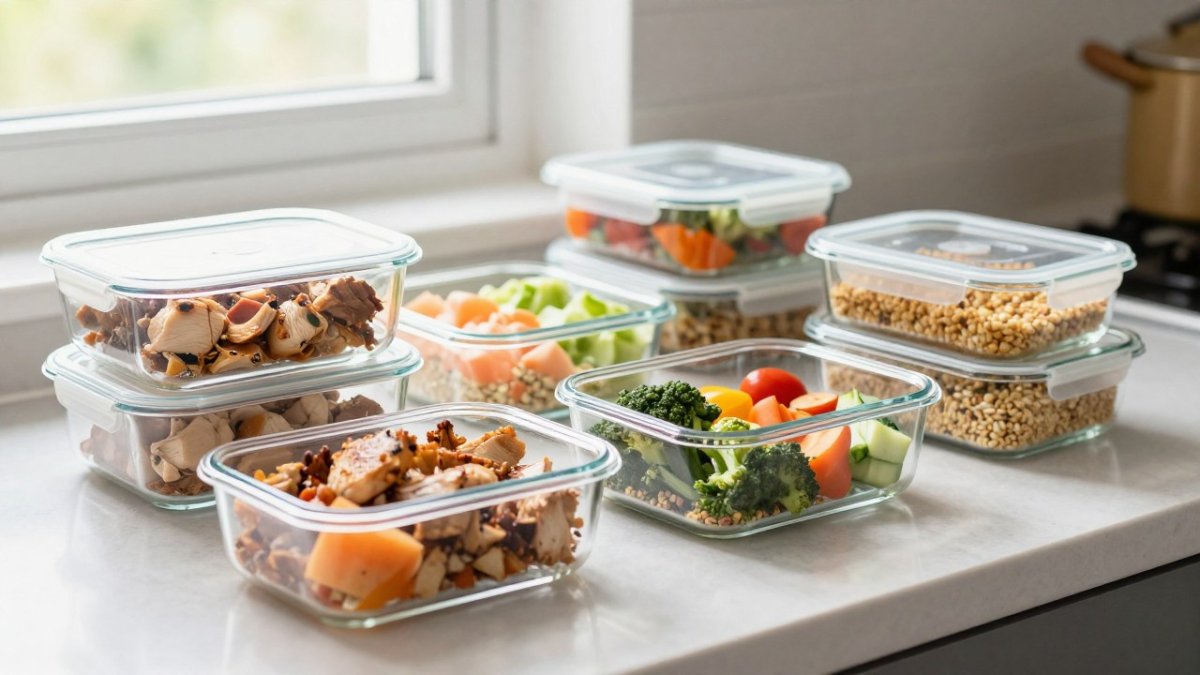
Breakfast: prepare in under 20 minutes
Breakfast is the meal most people skip when a night runs long, so a grab-and-go option is the highest-value prep habit. These three keep for three to four days refrigerated:
- Overnight oats: Combine rolled oats, milk of choice, chia seeds and a spoon of yoghurt in a jar. Add grated apple or berries in the morning. Active time is about 5 minutes the night before.
- Egg muffins: Whisk six eggs with chopped spinach and peppers, pour into a greased muffin tin and bake at 180°C for 18-20 minutes. They reheat in 40 seconds in the microwave.
- Chia pudding: Mix chia seeds with milk and a little honey, refrigerate overnight, and portion into small jars. Top with fruit before eating.
For a savoury, broth-based start, the Saname Breakfast Starter is a quick morning base you can prepare in advance, and high-protein breakfast ideas cover a wider range of make-ahead choices.
Lunch: portable bowls that travel well
Grain bowls and noodle bowls are the strongest lunch options because they hold up in a fridge and need no reheating at a desk.
- Miso chicken noodle bowl: Batch-cook sliced chicken, cook rice noodles, and portion into containers with shredded carrot and cucumber. Add a splash of miso broth when you reheat.
- Chickpea and roasted vegetable grain bowl: Roast a tray of pumpkin, courgette and red onion, then portion with cooked quinoa and drained chickpeas. A lemon-tahini dressing travels in a small jar.
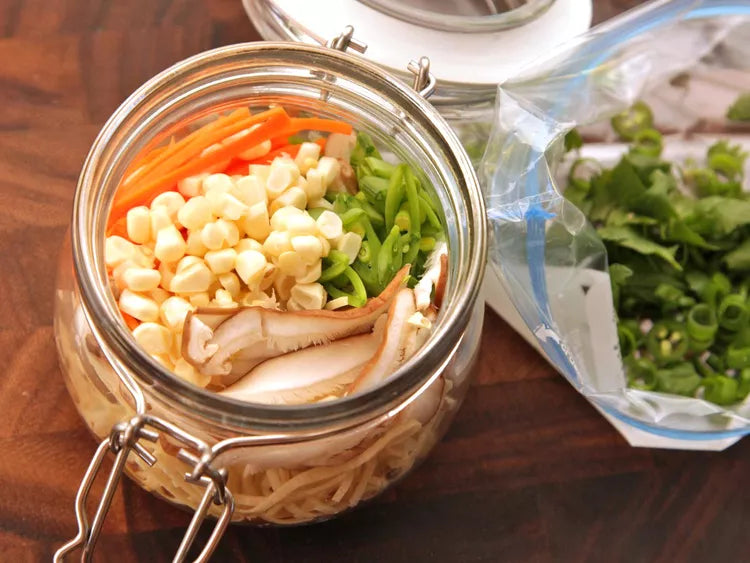
- SANAME-friendly ramen jar: Put noodles, shredded cabbage and sliced protein in a jar. At lunch, add hot water and a 24g scoop of SANAME P360™ Bone Broth, cover and wait three minutes.
The Meal Prep High Protein Noodle Bowls guide explains how to batch these ahead, and the Sweet & Sour Miso Ramen Chicken Stir-Fry works equally well as a lunch portion.
Dinner: batch once, eat twice or three times
Dinner prep is about cooking more than you need once so the next night is half done. A single batch of stir-fry, soup or curry stretches across two or three meals.
Other reliable dinner bases include chicken and vegetable soup, beef and vegetable curry, and bolognese sauce. Each freezes well and reheats without losing quality.
Snacks and components to prepare ahead
Snacks are where busy weeks fall apart, so prepare two or three options on the same day you cook your main batch:
- Hard-boiled eggs: Boil a dozen, keep them in the fridge, and peel as needed.
- Cut vegetables and hummus: Portion carrot, celery and cucumber sticks into containers with a spoon of hummus.
- Roasted chickpeas: Toss a tin of drained chickpeas with olive oil and paprika, roast at 200°C for 25 minutes, and store in an airtight jar.
Dietary adaptations and substitutions
Here are the most useful dietary swaps for the recipes above:
- Vegetarian: Replace chicken with firm tofu, tempeh or extra chickpeas. Use vegetable-based broth rather than a meat stock.
- Vegan: Use plant milk for overnight oats and chia pudding, and check that your broth and noodles are plant-based. Swap honey for maple syrup.
- Gluten-free: Use gluten-free oats, rice noodles or gluten-free pasta, and check labels on sauces such as soy sauce and miso.
Each recipe above can use SANAME bone broth as the flavour base. A single 24g scoop of SANAME P360™ Bone Broth mixed with hot water gives you a savoury base in seconds, so you spend prep time on vegetables and protein instead of stock. It is the quick, convenient alternative to making bone broth from scratch: boil the kettle, rip, tip or scoop, and sip, a genuine Hug in a Mug.
30-Minute Healthy Meals for Weeknights
With only half an hour, choose recipes where active cooking takes under 15 minutes and the rest is simmering or resting.
The Sweet & Sour Miso Ramen Chicken Stir-Fry is a good example: lean chicken, a handful of vegetables and a miso broth base in one pan. The same method works for prawns or tofu.
A Realistic Weeknight Schedule
Here is a timing plan for a typical busy evening:
| Step | Active time | Passive time | Notes |
|---|---|---|---|
| Heat broth and water | 2 min | 3 min | Use a single 24g scoop per serve |
| Cook protein | 5 min | 0 min | Slice thinly so it cooks fast |
| Add vegetables | 3 min | 0 min | Frozen mixes skip the chopping |
| Add noodles or rice | 2 min | 0 min | Reheat from the fridge if prepped |
| Finish and serve | 1 min | 0 min | Add sesame oil at the end |
Active time
Total active time sits around 13 minutes, realistic for most people after work.
Freezer-Friendly Meals and Batch Cooking Ideas
Batch cooking protects you on the worst nights: cook once, portion immediately, and freeze what you will not eat within four days. Soups, curries and braises freeze well, while crisp salads and fried foods do not.
What freezes well and what does not
| Freezes well | Freezes poorly |
|---|---|
| Soups and broths | Green salads |
| Curries and stews | Fried foods |
| Bolognese and ragu | Cooked pasta (unless slightly undercooked) |
| Braised meats | Cream-based sauces (they can split) |
| Cooked rice and grains | Fresh herbs (unless frozen in oil) |
| Portioned stir-fry bases | Soft cheeses |
Batch cooking: a realistic Sunday session
A workable batch session takes about 90 minutes of active time and produces four to six dinners. The sequence matters more than the recipes:
- Start the longest item first. Put a pot of chicken and vegetable soup on to simmer, then a beef curry in a second pot.
- Roast a tray of vegetables at 200°C for 25-30 minutes while the pots simmer.
- Cook a large batch of rice or quinoa and portion it into containers.
- Prepare a stir-fry base, sliced chicken, chopped vegetables, and store it raw in the fridge for a Monday or Tuesday cook.
- Cool everything quickly. Divide into shallow containers and refrigerate within two hours.
Good freezer candidates include chicken and vegetable soup, beef curry, bolognese, and a portioned stir-fry base. Cook a double batch, freeze half in single-serve portions, and you have three ready dinners for the coming weeks.
Storage durations at a glance
| Food | Fridge | Freezer |
|---|---|---|
| Cooked soups and stews | 3-4 days | 2-3 months |
| Cooked rice and grains | 1 day (reheat thoroughly) | 1 month |
| Cooked chicken | 3-4 days | 2-3 months |
| Bolognese sauce | 3-4 days | 2-3 months |
| Raw marinated protein | 1-2 days | 1-3 months |
| Portioned broth (made up) | 3-4 days | 2-3 months |
Label every container with the date you made it. A strip of masking tape and a marker is enough.
Portioning and thawing
Stock your freezer with portions that match how you eat: single-serve for lunches, family-size for dinners. Thaw in the fridge overnight rather than on the worktop, a 500g portion typically takes 12-24 hours.
Never refreeze a meal once it has been thawed. Eat it or cook it again, because refreezing lowers quality and increases food safety risk.
A five-night plan and consolidated shopping list
Here is a ready-to-use five-night plan that uses the batch session above and keeps each night under 30 minutes of active time:
| Night | Meal | Active time | Source |
|---|---|---|---|
| Monday | Miso chicken stir-fry with noodles | 15 min | Fresh cook from prepped base |
| Tuesday | Chicken and vegetable soup | 5 min | Reheat from Sunday batch |
| Wednesday | Beef curry with rice | 5 min | Reheat from Sunday batch |
| Thursday | Chickpea and roasted vegetable grain bowl | 10 min | Assemble from prepped components |
| Friday | Bolognese with pasta | 10 min | Reheat sauce, cook pasta fresh |
Consolidated shopping list for the week:
- Protein: 500g chicken thigh, 500g beef mince, 1 tin chickpeas, 6 eggs
- Vegetables: 1 bag frozen mixed vegetables, 1 pumpkin, 2 courgettes, 2 red onions, 1 bag carrots, 1 cucumber, 1 bag spinach, 1 cabbage
- Carbohydrates: 1 bag rice, 1 packet rice noodles, 1 packet pasta, rolled oats, quinoa
A realistic weekly plan might look like this: cook one stir-fry on Monday, batch a pot of soup on Wednesday, and reheat the frozen curry on Friday. The SANAME range of functional foods gives you the full line of broths, brews and soups in one place, and the 3 Day Broth Fast Variety Pack, priced at $69.99 AUD, is a good way to try all ten flavours before choosing favourites.
Food Safety, Storage and Reheating Tips
Food safety matters more with meal prep than with cooking a single meal, because food sits in the fridge for days.
- Chill quickly: Refrigerate cooked food within two hours of cooking. Divide large batches into shallow containers so they cool faster.
- Refrigerated storage: Most cooked meals keep for three to four days in the fridge. Label each container with the date you made it.
- Reheating: Reheat until the food is steaming hot all the way through (Cooling and reheating food). Stir halfway through microwaving so the centre heats evenly.
Guidance on food handling and storage is published by Food Standards Australia New Zealand, which is a useful reference when you are unsure.
If you want a simpler approach, a broth-based base keeps well.
Stocking Your Freezer and Fridge With SANAME This Week
Planning a week of meals is easier when your shopping list is organised around a few core ingredients.
SANAME makes the flavour side simple. Our range includes ten savoury flavours, so you can rotate from miso to laksa to tom yum without buying separate stocks.
To stock up, the SANAME range of functional foods gives you the full line of broths, brews and soups in one place.
Frequently Asked Questions
What are some quick and healthy meals to prep for busy nights?
Good candidates include sheet-pan chicken with roasted vegetables, turkey and vegetable chilli, and grain bowls built around quinoa or brown rice. Each keeps well in the fridge for three to four days and reheats in a few minutes. Pairing a protein, a vegetable and a slow-release carbohydrate in each container keeps meals balanced without extra effort. Single-serve options such as SANAME bone broth stir-fry bases can also be ready in about the time it takes to boil the kettle.
How long can meal-prepped food be kept in the fridge?
Most cooked meals stay safe in the fridge for three to four days when cooled quickly and stored in airtight containers. Cool food within two hours of cooking and refrigerate it promptly. Label each container with the date. Anything you will not eat within that window should go into the freezer instead, where most cooked dishes keep well for around three months.
Can I prepare healthy dinners ahead of time without them going soggy?
Yes, if you keep components separate. Store sauces, dressings and crisp vegetables in their own small containers, and keep rice or noodles apart from wet dishes. Reheat the main component, then add fresh elements just before eating. Roasting vegetables rather than steaming them helps them hold their texture for longer.
What foods are best for batch cooking and freezing?
Soups, stews, curries, chilli, bolognese sauce and cooked grains freeze particularly well. Avoid freezing dishes with a high water content in raw vegetables, such as cucumber, or fried foods that lose their crispness. Portion meals before freezing so you can thaw only what you need.


