

THE SANAME JOURNAL
Make Bone Broth Convenient: Batch, Store and Serve It
Last Updated: November 2, 2026
Quick Summary
To make bone broth convenient, cook one large batch on a day you are home, cool it fast in a sink of cold water, and portion it into single serves before bed. Freeze anything you will not use within a few days, and keep instant collagen broths in the pantry to cover the gaps.
- A 6-litre pot is a practical sweet spot, covering a week of mugs, soups and sauces.
- A pressure cooker cuts cooking time from most of a day to a couple of hours.
- Refrigerate broth within two hours of cooking, sooner if the kitchen is warm.
- Leave 2-3 cm of headspace in jars and never seal hot broth in a tight-lidded jar.
- Freeze broth in ice-cube trays, muffin tins or flat bags to match how you will use it.
Table of Contents
- Why Bone Broth Fails on Busy Weeks (and How to Fix It)
- Bone Broth Meal Prep: Plan One Batch, Cover Seven Days
- Slow Cooker Bone Broth and Pressure Cooker Shortcuts
- How to Store Bone Broth So It Stays Safe to Drink
- Ways to Use Bone Broth in Meals All Week
- Stock Your Pantry With Broth You Can Make in Minutes
- Frequently Asked Questions
Why Bone Broth Fails on Busy Weeks (and How to Fix It)
Bone broth is simple food, but most people quit it within a month. The reason is rarely the recipe. It is the hours of simmering, the bulky stockpot, and the sink full of bones at 10pm on a Sunday.
Many athletes, busy parents and people recovering from surgery find they want the nutrition but cannot sustain the routine. A common approach is to treat broth as batch cooking, not daily cooking. Cook once, store well, and use it all week.
Below, we show you exactly how to plan one batch, store it safely, and turn it into meals. The trick most guides miss is that broth fails at the storage stage, not the cooking stage.
Bone Broth Meal Prep: Plan One Batch, Cover Seven Days
Bone broth meal prep works when you cook a large batch once, cool it fast, and portion it before it becomes a chore. One stockpot of broth can cover a week of mugs, soups and sauces if you plan the portions first.
Start with a simple weekly rhythm:
- Pick one day for cooking, usually a day you are home anyway.
- Buy bones and aromatics in one shop.
- Cook a big batch while you do other things.
- Cool, skim and strain the same evening.
- Portion into single serves and fridge or freeze.
A common mistake is cooking a small pot. It takes the same time to simmer a big batch as a small one, so make the batch worth the effort.
Choosing Bones and Aromatics for a Bigger Yield
Gelatin-rich bones give you the body and texture that make broth satisfying. If you are new to chicken bone broth, it is worth reading up before you choose your bones. Chicken feet, wings, necks and beef marrow bones all help. For beef bone broth specifically, the cut of bone makes a real difference to yield and flavour.
For aromatics, keep it simple and cheap:
- Onion, halved, skin on for colour
- Garlic cloves, crushed
- Carrot and celery offcuts
- Bay leaf, peppercorns and a splash of vinegar
- Salt added at the end, not the start
Roasting, Skimming and Straining Without the Fuss
Roasting bones first deepens flavour, but it is optional on busy weeks. If you roast, do it at high heat until browned, then move straight to the pot.
Skimming is where people lose patience. Skim once in the first hour, then leave it. A gentle simmer, not a rolling boil, keeps the broth clear and means less skimming overall.
Straining is the last chore. Line a colander with muslin, ladle the broth through, and let it drain without pressing. Pressing clouds the broth.
Slow Cooker Bone Broth and Pressure Cooker Shortcuts
Slow cooker bone broth is the lowest-effort option: load the pot in the morning, set it low, and strain in the evening.
Here is how the methods compare on realistic terms:
Method |
Hands-on effort |
Total time |
Batch size that works |
Best for |
|---|---|---|---|---|
Stockpot on the stove |
20-30 min active, plus skimming |
6-12 hours simmer |
4-8 litres |
Big batches, richest body |
Slow cooker |
15-20 min active |
8-12 hours on low |
4-6 litres |
Set-and-forget weekdays |
Pressure cooker |
20-30 min active |
1.5-3 hours under pressure, plus natural release |
4-6 litres |
Last-minute batches |
Instant broth |
Minutes |
Minutes |
Single serves |
Backup when the fridge is empty |
The honest trade-offs. A slow cooker needs almost no attention, and a long stove simmer gives a deep flavour if you can leave it running.
Batch size matters more than method. It takes roughly the same hands-on time to simmer a big batch as a small one, so make the batch worth the effort.
A convenience-first weekly rhythm. Pick one day you are home anyway. Buy bones and aromatics in one shop.
Watch out: do not fill a pressure cooker past its maximum fill line.
SANAME - Intro Best of P360™ Multi-Collagens & Bone Broths Variety Pack →
When to skip cooking altogether. Even the best batch cook runs out.
How to Store Bone Broth So It Stays Safe to Drink
Storing bone broth safely means cooling it fast, refrigerating promptly, and freezing what you will not drink within a few days.
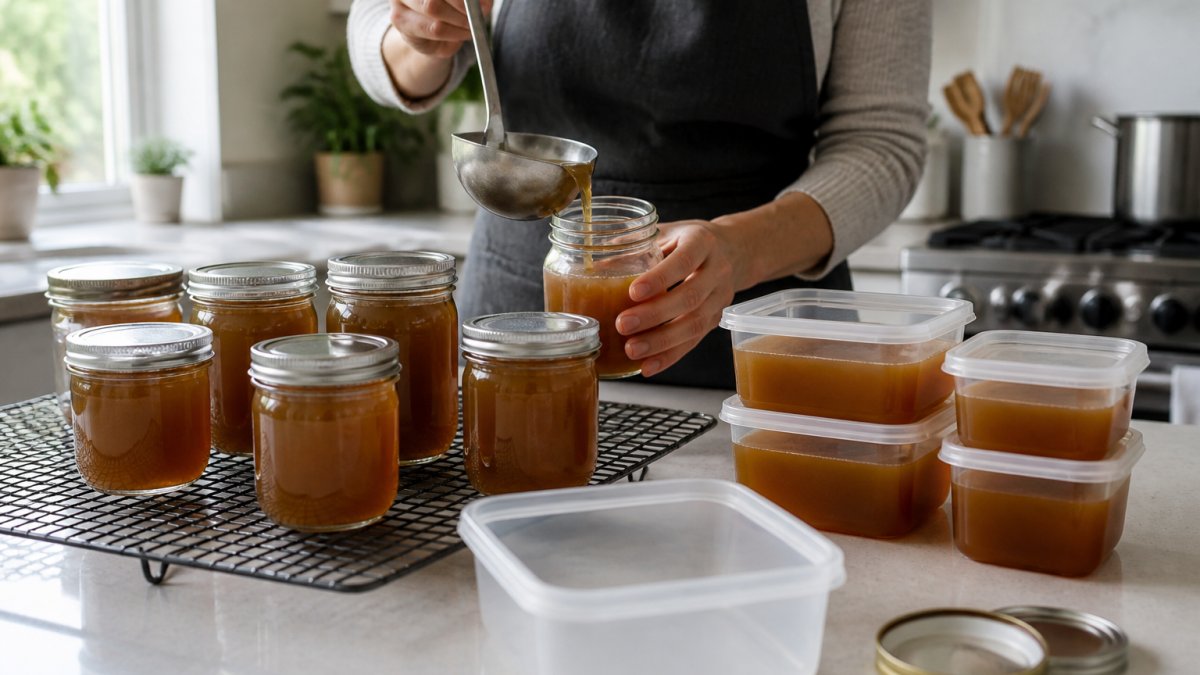
The cooling step is where most batches go wrong. Do not leave the pot on the stove to cool overnight.
Follow this routine:
- Cool the pot quickly by sitting it in a sink of cold water, or decant into shallow containers.
- Refrigerate within two hours of cooking, sooner if the kitchen is warm.
- Skim the fat once chilled, if you prefer a leaner broth. Keep the fat if you want a richer mouthfeel.
- Portion into glass jars or freezer-safe containers, leaving 2-3 cm of headspace for expansion.
- Label with the date and the batch.
- Freeze anything you will not use within a few days.
Watch out: never seal hot broth in a tight-lidded jar and leave it on the worktop.
How long it keeps. Broth is generally best used within a few days when refrigerated and within a few months when frozen; check official food safety advice for guidance. For authoritative guidance on cooling, refrigerating, freezing and reheating cooked food, check the food safety advice from the national food regulator.
Portioning for everyday use. The convenience win is portion size, not batch size. Freeze broth in the format you will actually use:
- Ice-cube trays for small flavour boosts, a couple of cubes to loosen a sauce or deglaze a pan.
- Muffin tins for single-mug serves; pop the frozen pucks into a freezer bag once set.
- Flat freezer bags for soups and grains, lay them flat so they stack and thaw in minutes.
- Glass jars for fridge-ready mugs you will drink within the week.
Thawing and reheating. Thaw overnight in the fridge, or drop a frozen portion straight into a saucepan over low heat if you are in a hurry.
Concentrated batches. If you reduce a batch to save freezer space, label it as concentrated and dilute to taste, a little goes a long way in sauces and grains.
Ways to Use Bone Broth in Meals All Week
Bone broth earns its place when it becomes an ingredient, not just a drink. A mug is fine, but the same broth can carry a whole week of meals.
Try these:
- Drink it as a savoury mug in the afternoon
- Use it as the base for soup or ramen
- Cook rice or noodles in it instead of water
- Add a splash to sauces, gravies and stir-fries
- Use it to loosen mashed potato or risotto
For more ideas on actually consuming the batch you have cooked, our guide on how to drink bone broth covers flavours and timing. If you want a ready-made high-protein option to sit alongside your own cooking, our high-protein noodle bowls are built for quick meal prep.
Stock Your Pantry With Broth You Can Make in Minutes
Even the best batch cook runs out. The fix is a pantry backup, so a busy week never means going without.
Instant collagen bone broths dissolve in hot water in minutes. They are not a replacement for a slow simmered batch, but they cover the gaps: the morning you slept in, the evening you got home late, the day the freezer is empty.
For a variety pack that keeps the cupboard stocked, our intro pantry pack of multi-collagen bone broths gives you single serves across flavours, so you can rotate mugs and use them as a stock base. Keep a few in your desk drawer and gym bag too. Convenience is the whole point.
Frequently Asked Questions
How can I make bone broth more convenient to prepare?
Cook one large batch rather than several small ones, and let the stockpot or slow cooker do the work while you are elsewhere. Roast bones in advance, freeze them until you are ready, and strain straight into portion-sized containers so nothing needs decanting later. A powdered or single-serve bone broth is the fastest route on weeks when even that is too much, since you only need to boil the kettle.
Can I freeze bone broth in individual portions?
Yes. Cool the broth quickly, then fill freezer-safe containers or silicone moulds, leaving a couple of centimetres of headspace for expansion. Portion sizes of 250 to 500 millilitres suit most mugs, soups and sauces. Label with the date and use within three months for best quality. Thaw overnight in the fridge and reheat to a rolling boil before serving.
How much bone broth do you need to drink to see benefits?
There is no single agreed amount, and it depends on what you are using it for. A daily mug of 250 millilitres is a common starting point for general nourishment, while higher-protein products list their protein content per serve so you can match it to your recovery or intake goals. Check the label and adjust to your appetite and needs rather than following a fixed rule.
What is the downside to drinking bone broth?
Homemade broth is low in protein unless you fortify it, and long simmering takes hours of energy and attention. Salt content varies widely, so taste before seasoning, especially if you are watching sodium. Store it safely: refrigerate within two hours of cooking, use within four days, and reheat thoroughly. Anyone with dietary restrictions should check labels or speak to their GP.
Busy weeks will always test your routine. The answer is not more willpower, it is a system: one big batch, fast cooling, smart portions, and a pantry backup for the days it all falls apart. SANAME makes that backup easy with practitioner-grade, Australian owned multi-collagen bone broths that dissolve in minutes and support digestion, immunity and recovery. Get started with SANAME and keep nourishing broth within reach every day of the week.


